The strongest community merch does more than place a creator’s name on a T-shirt. It captures something fans already recognize: an inside joke, a repeated phrase, a shared milestone, or a symbol connected to the community.
That emotional connection is what turns an ordinary product into something fans want to wear, collect, photograph, and share.
💡 Good merch says, “I follow this creator.” Great merch says, “I belong here.”
Start with the Community, Not the Product
It is tempting to begin creator merch by choosing a product: a hoodie, mug, tote bag, or sticker.
A better starting point is the community itself.
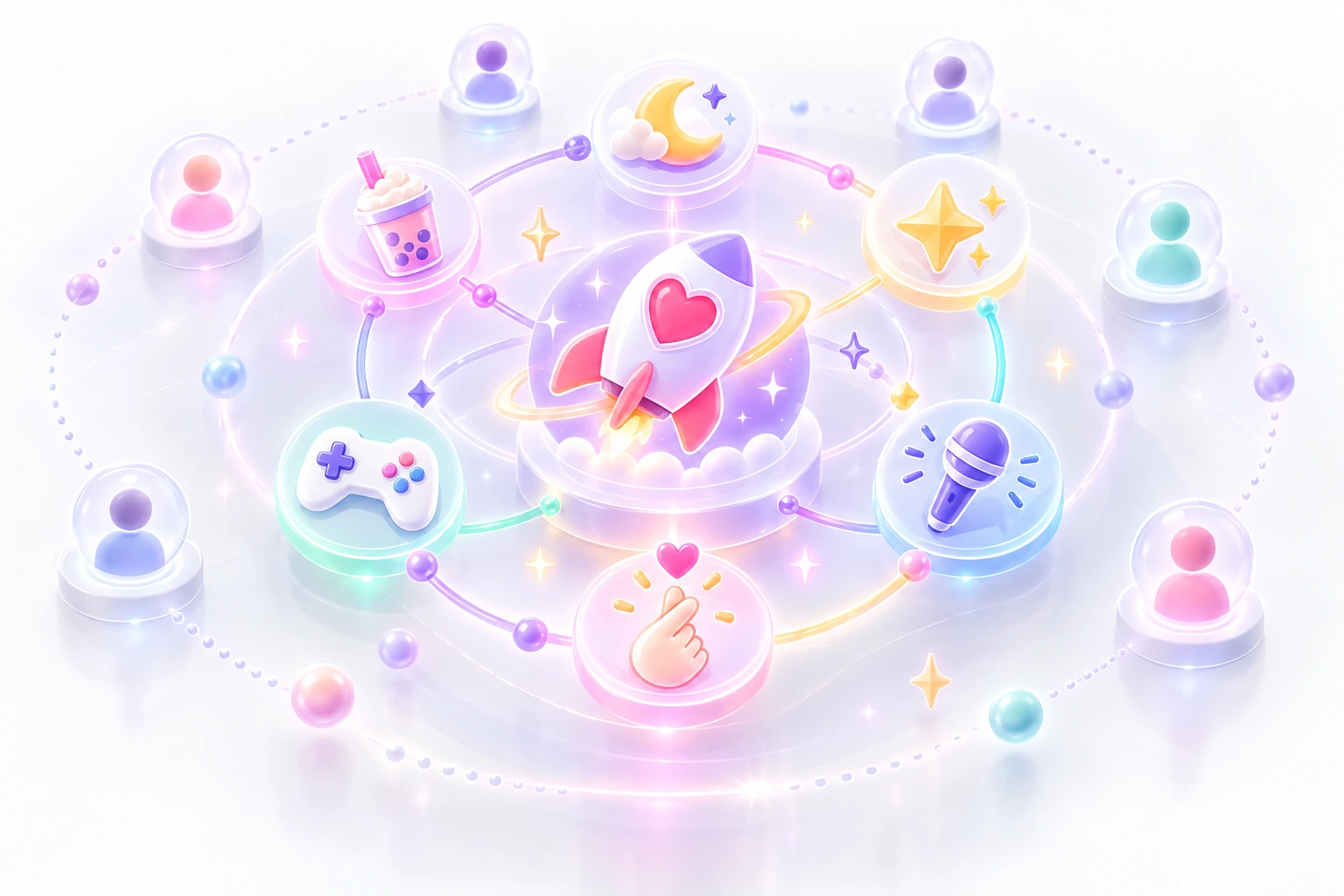
Look at the comments, livestream chats, Discord conversations, fan art, and recurring reactions around your content. Which moments continue to appear? Which phrases do fans repeat without being prompted? Which characters, colors, or visual details do they immediately associate with you?
These patterns may reveal stronger community merch ideas than a generic logo.
Useful signals include:
- A phrase fans repeat in the comments
- A funny mistake that became a running joke
- A character or object that regularly appears in your content
- A color combination associated with your channel
- A milestone the community celebrated together
- A nickname fans use for themselves
If you are still deciding whether merchandise fits your creator business, read Why Creator Merch Is Becoming a New Revenue Stream.
The product should begin with a shared meaning. The physical item comes later.
Find Symbols Only Your Fans Understand
The most memorable fan merchandise often works on two levels.
To an outsider, it may look like an attractive rocket, flower, snack, animal, or short phrase. To a fan, it represents a specific story.
This creates a feeling of recognition without forcing the product to look like advertising.
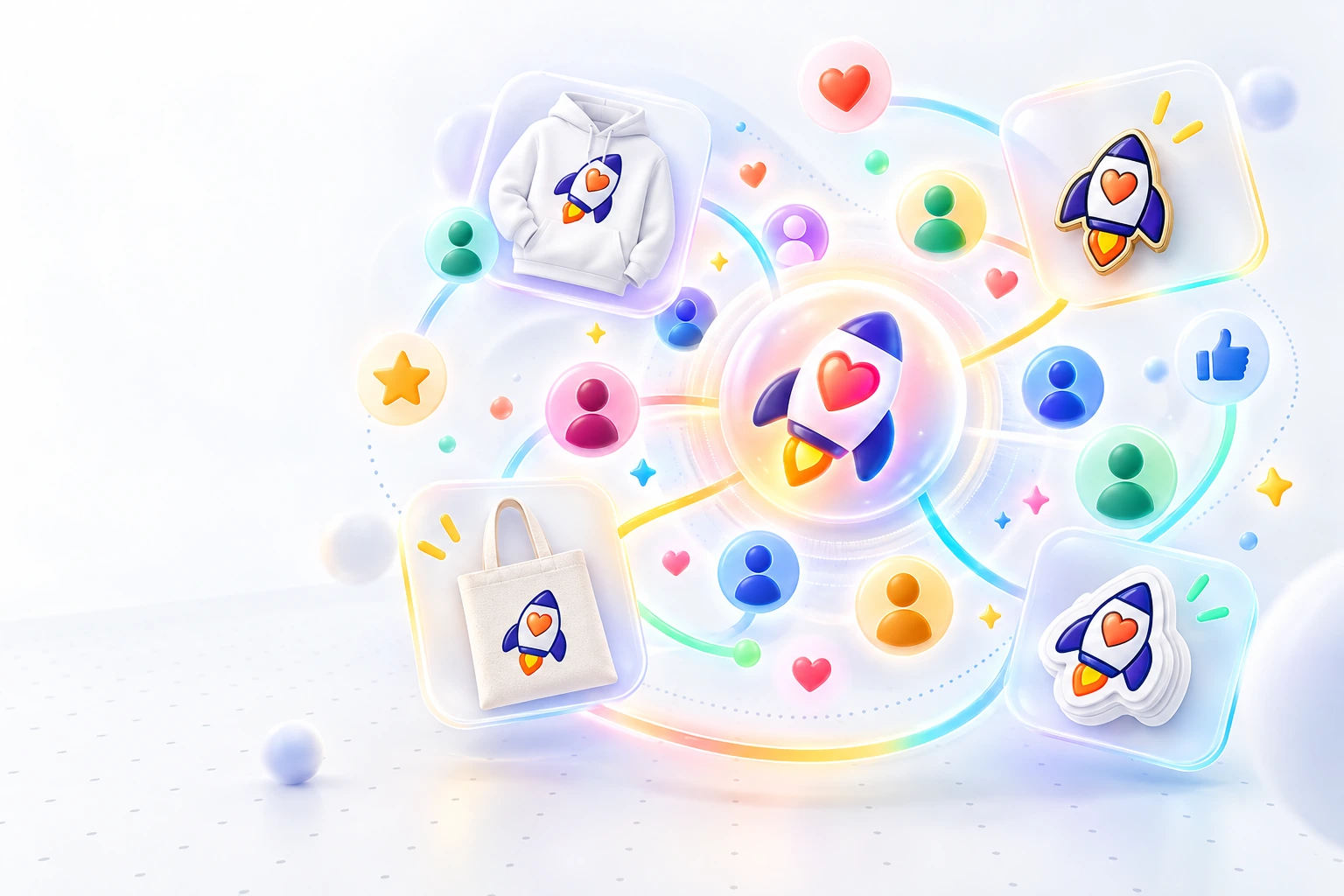
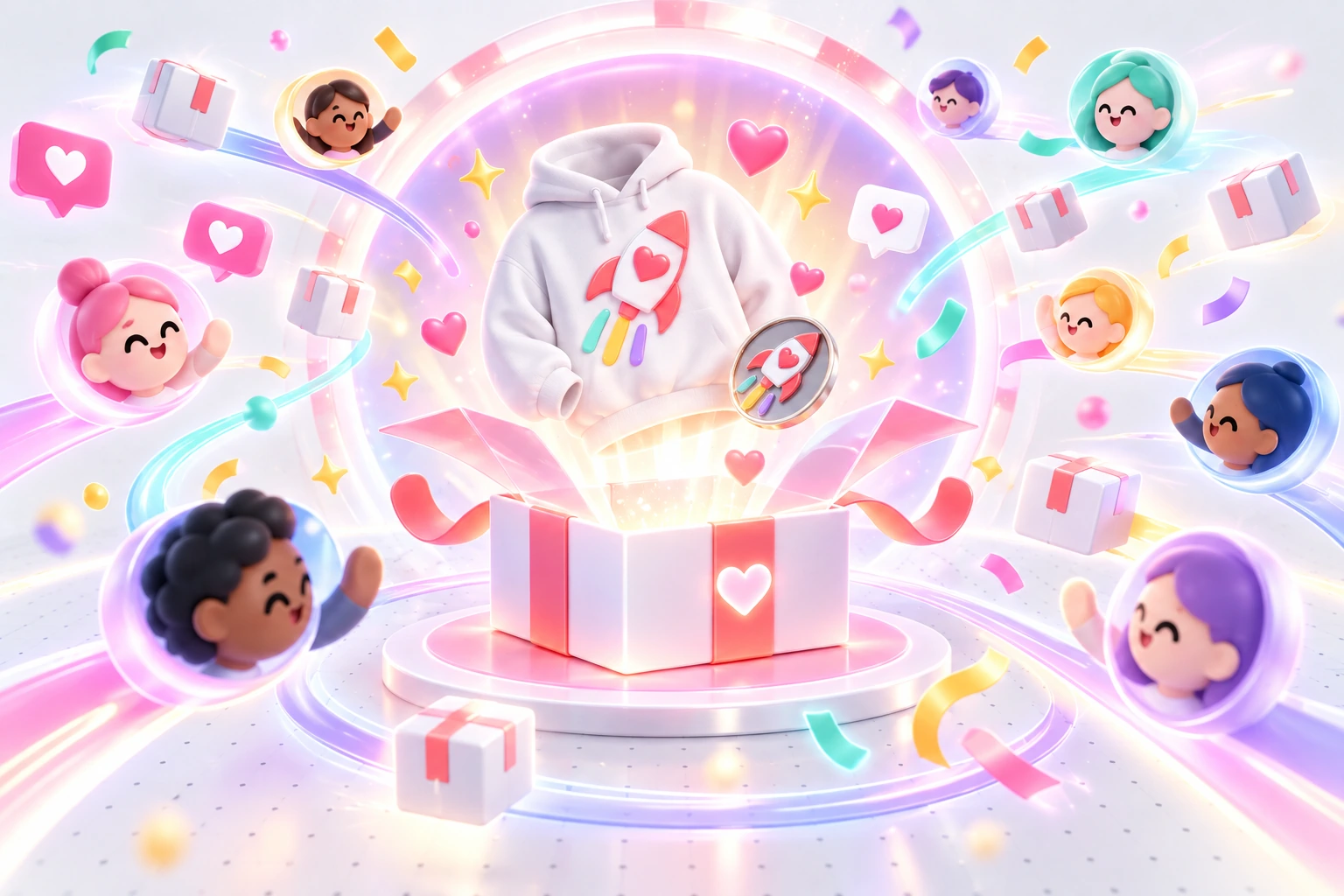
For example, imagine a creator whose audience celebrates every new project with a small rocket emoji. Instead of printing the channel name across a hoodie, the creator could develop a rocket with a heart-shaped window as the community symbol.
That symbol could represent:
- Starting something new
- Supporting the creator’s journey
- Growing together
- Belonging to the same creative world
When developing a community symbol, keep it:
- Simple enough to recognize at a small size
- Distinctive enough to belong to your community
- Flexible enough to work on different products
- Meaningful enough to inspire a story
Avoid using references that depend entirely on copyrighted characters, popular logos, or trends owned by someone else. The strongest symbols come from your own content and community history.
Build a Product System, Not One Repeated Logo
Once you have a strong symbol, do not paste the same image onto every available product.
Effective branded merchandise adapts the idea to the object.
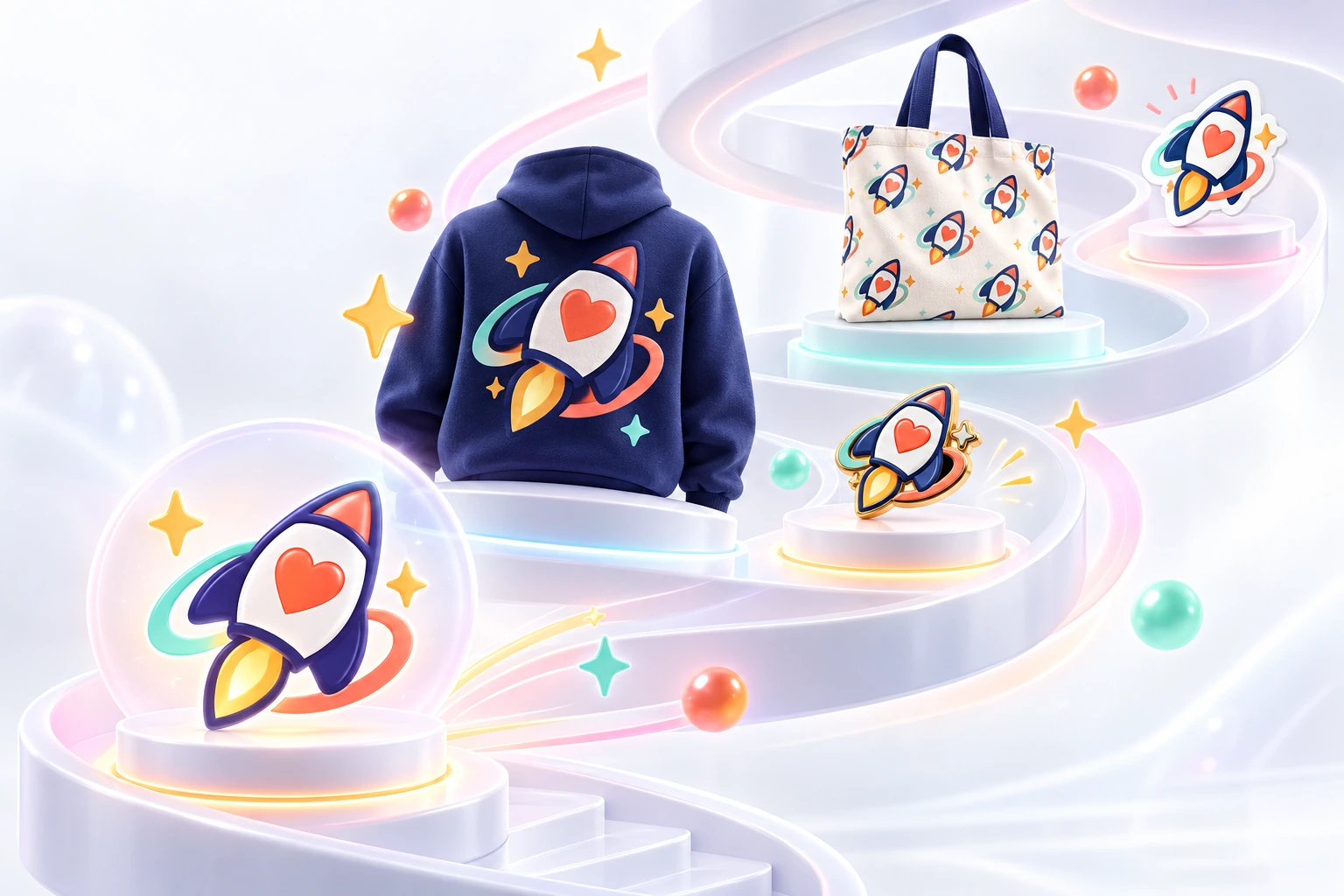
A bold symbol might become a large hoodie graphic. A simplified version can work as an enamel pin. Smaller decorative elements can form a repeating tote-bag pattern, while the main silhouette becomes a die-cut sticker.
One community merch concept might develop into:
- Hoodie: large statement artwork
- T-shirt: smaller chest symbol
- Tote bag: repeating pattern
- Pin: simplified emblem
- Sticker: expressive character or icon
- Poster: complete visual story
The identity stays consistent, but every product offers a different reason to buy.
You can also build different price levels. Stickers and pins provide an accessible first purchase, while apparel and limited products give highly engaged fans something more substantial.
For inspiration on turning a social audience into a lasting identity, explore How to Build a Creator Brand Beyond Social Media. You can also browse GenkiMall to see how creators present different product categories.
Make the Launch a Shared Event
Community merch should not suddenly appear without context. Bring fans into the process before launch.
You might share several color options, ask followers to choose between two products, reveal small parts of the artwork, or invite the community to suggest the next item.
This does not mean fans must make every creative decision. The creator still protects the overall style. Participation simply gives the audience a reason to care about the outcome.
A simple launch sequence could be:
👀 Tease the idea → 🗳️ Ask for feedback → 🎨 Reveal the design → 🎁 Launch the collection → 📸 Share fan reactions
Limited editions can work well when they mark a real moment, such as an anniversary, completed challenge, live event, or community milestone. The limit should feel meaningful rather than artificial.
After launch, observe more than sales:
- Which symbol receives the strongest reaction?
- Which product do fans share most often?
- Which price level attracts first-time buyers?
- Which design generates requests for another version?
- What story do fans tell when posting the product?
These signals can guide the next creator merch release.
✨ The first drop celebrates the community. The next drop grows from its response.
Create Community Merch with Genki
Turning one shared idea into several products normally requires design adaptation, mockups, product selection, listing images, descriptions, and store preparation.
Genki helps creators connect these stages. You can begin with an original image or creative description, explore suitable products, generate product visuals, prepare listing content, and develop a more connected merchandise collection.
A practical workflow looks like this:
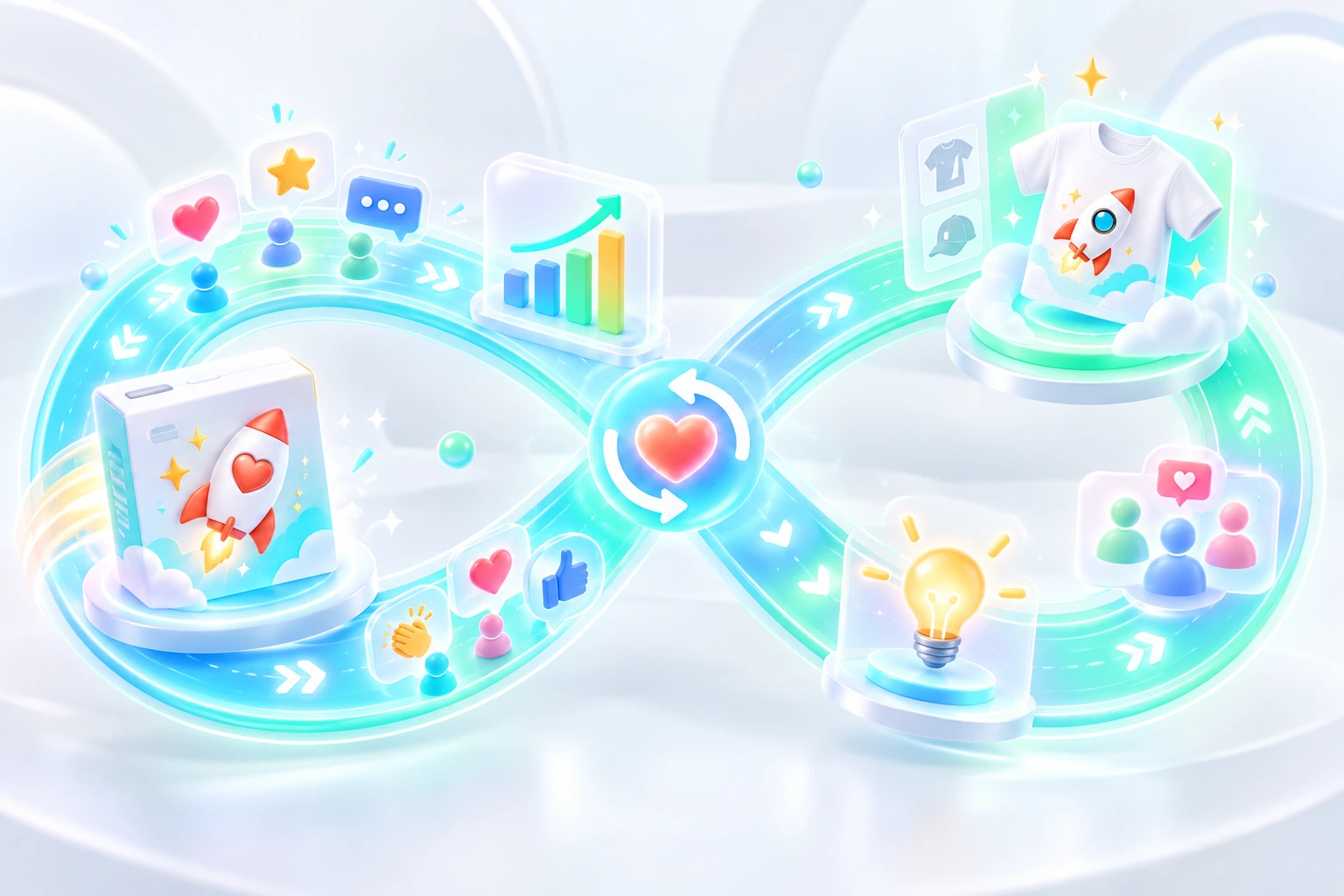
💬 Find a community signal → ✏️ Develop an original symbol → 👕 Explore products → 🖼️ Review visuals → 🚀 Launch and collect feedback
The community provides the meaning. The creator shapes the identity. Technology helps move the idea toward a sellable product.
🌟 Ready to turn a shared moment into something fans can keep?
Explore the Genki Creator Partnership and begin building community merch around the stories, symbols, and experiences that make your audience unique.
Frequently Asked Questions
Does community merch need to include my creator name or logo?
No. A symbol, character, phrase, or visual reference connected to your content may feel more natural and wearable than a large creator name.
How can I find good fan merchandise ideas?
Review repeated comments, livestream moments, fan art, community polls, popular characters, and shared milestones. Look for ideas fans already recognize without needing a long explanation.
How many products should the first collection include?
Three to five coordinated products are usually enough. Begin with one main product, one or two accessible items, and perhaps one special product for highly engaged fans.
Community merch works because fans already share the story. The product simply gives that story a physical form.