You have original artwork, a recognizable style, and perhaps even a small online audience. But turning those creative assets into physical products can still feel complicated.
Etsy print on demand offers artists a practical way to sell merchandise without purchasing inventory in advance. Products are created after an order is placed, allowing you to test ideas with less financial risk.
However, simply placing artwork on a T-shirt is not enough. A successful store needs original products, a focused audience, clear listings, and a consistent visual identity.
💡 The goal is not to launch everything. It is to launch a small collection people can understand and remember.
🎨 Why Etsy Works for Independent Artists
Etsy already attracts shoppers looking for creative, personal, and visually distinctive products. That makes it a natural starting point for artists who want to sell print on demand on Etsy.
Unlike a general online marketplace, Etsy customers often care about the story behind a product. They may want to know who created the design, what inspired it, and why it feels different from mass-produced merchandise.
This gives independent artists several advantages:
- Original artwork can become a clear selling point.
- A niche visual style can help products feel more memorable.
- Print on demand reduces the need to hold inventory.
- Small collections can be tested before expanding.
- Buyers can discover several products built around the same theme.
The strongest stores usually feel like small creative brands, not random collections of unrelated graphics.
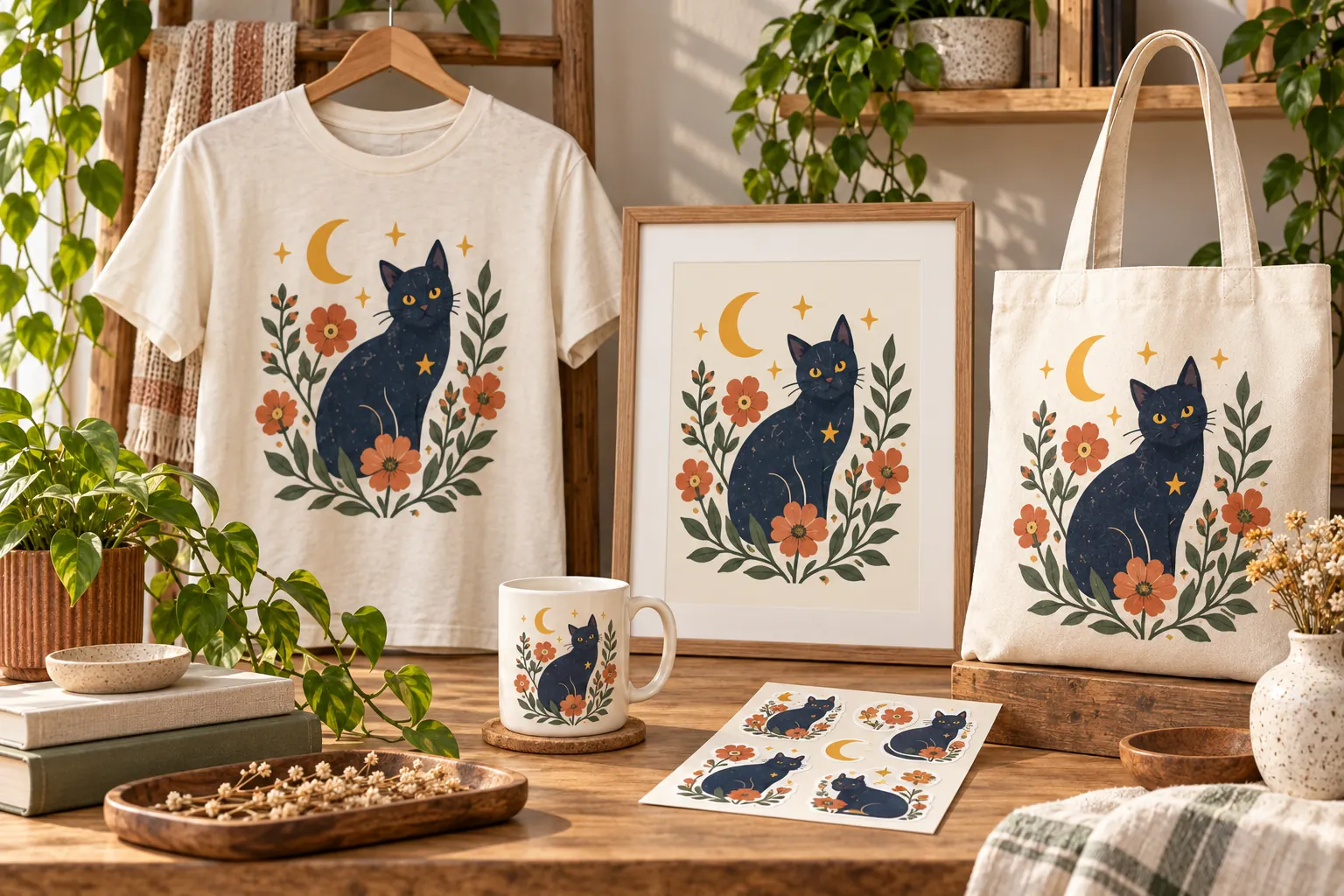
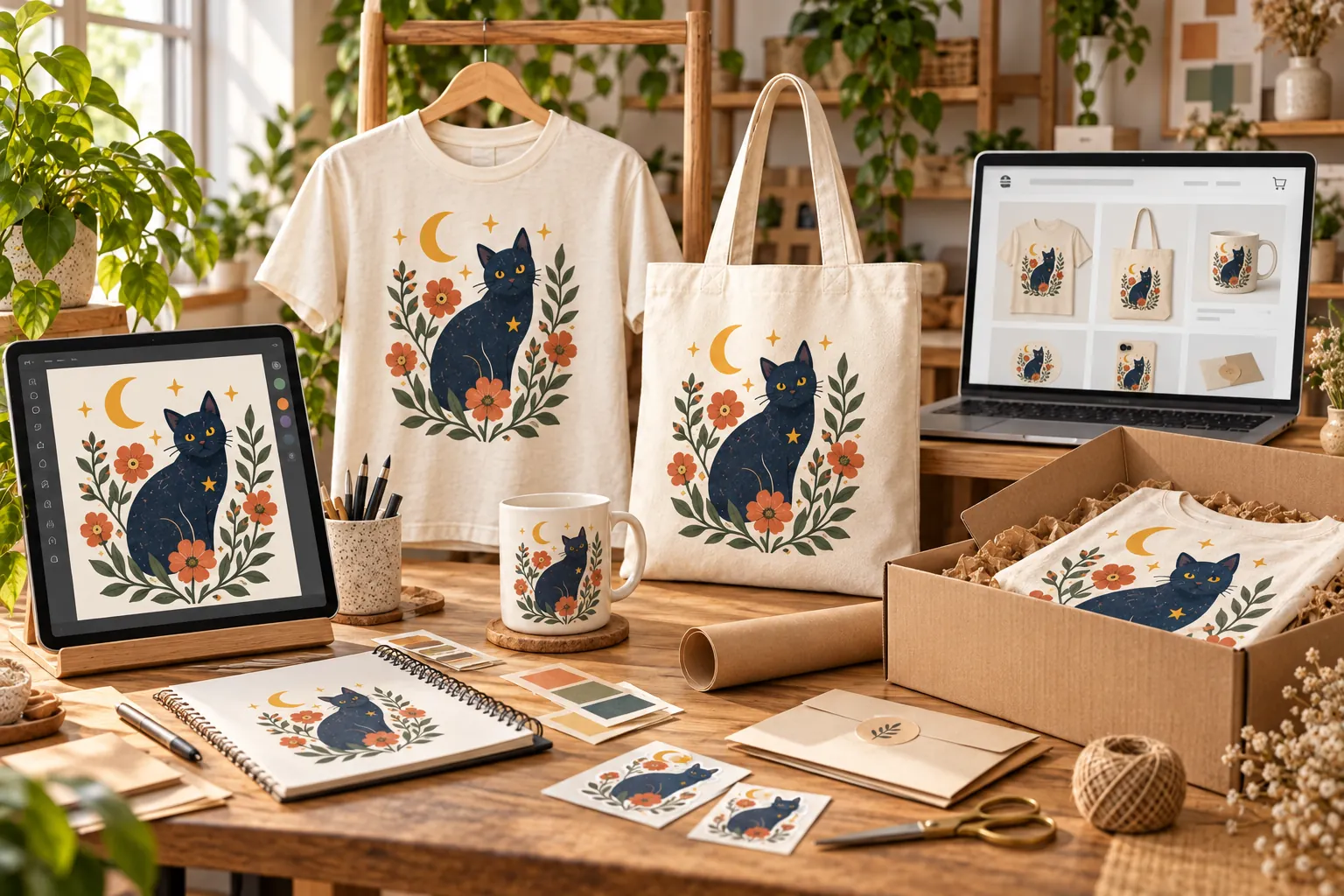
For example, an artist with a moon-and-cat illustration could build a focused product line containing a T-shirt, tote bag, mug, sticker sheet, and art print. Each item serves a different purpose, but the collection still belongs to one recognizable world.
✏️ Build Original Products with the Right Production Partner
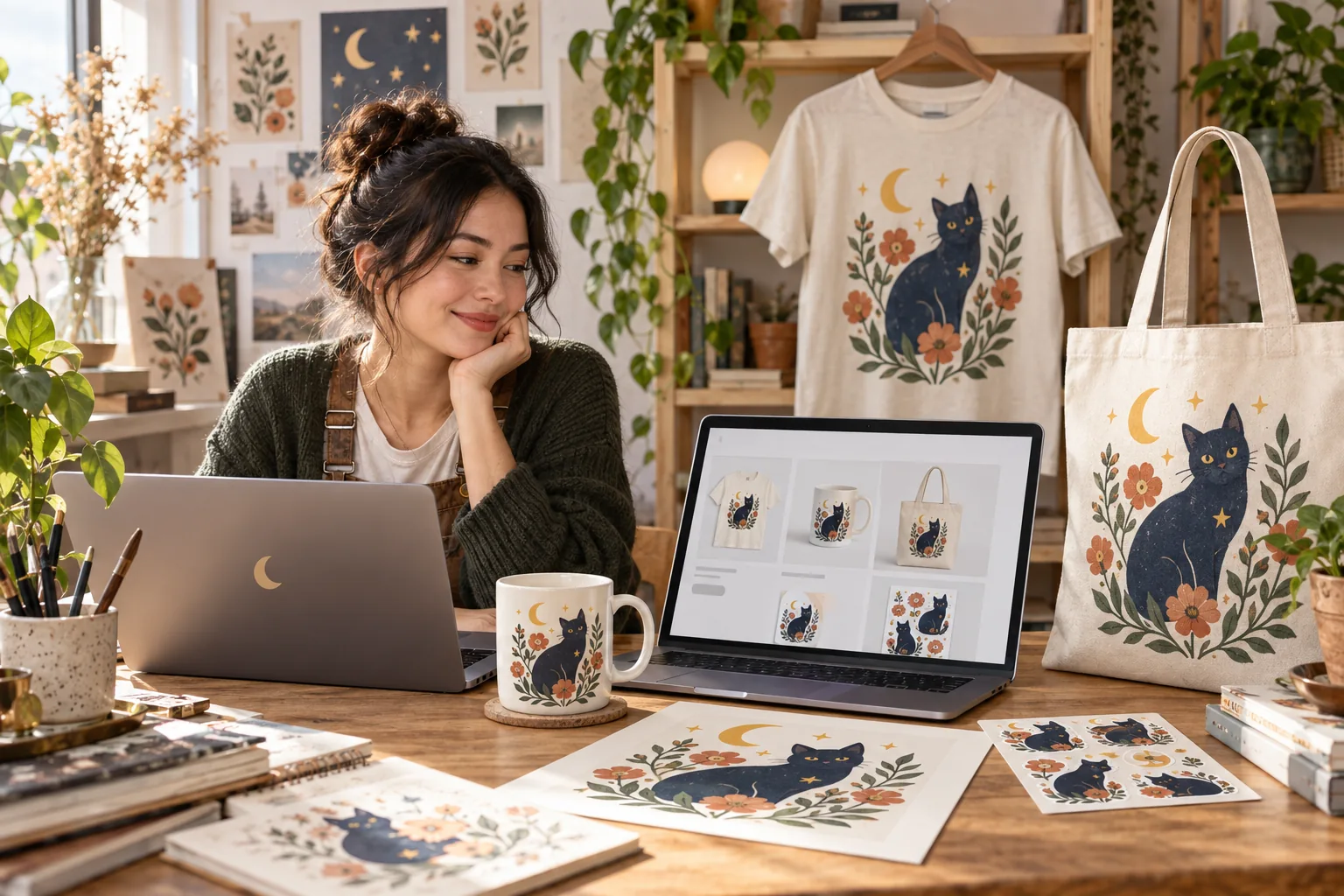
Before creating Etsy POD products, make sure the artwork genuinely comes from you.
Under Etsy’s Creativity Standards, sellers may offer products based on their own original designs even when a production partner prints or manufactures the final item. If AI tools are used to create an item, Etsy also requires that use to be disclosed in the listing description.
That means AI can support brainstorming, color exploration, pattern development, or mockup preparation—but the final collection should still reflect your creative direction.
You should also disclose your Etsy production partner and provide accurate information about where products are shipped from.
A reliable partner should offer:
- Consistent printing and product quality
- Clear production times
- Trackable shipping
- Appropriate packaging
- Product options that suit your artwork
💡 Key point: Print on demand handles production. It does not replace your responsibility for design quality, accurate listings, or customer experience.
Order samples whenever possible. A mockup may look perfect on screen while the actual print appears too dark, too small, or slightly different in color.
🛍️ Choose a Focused Product Collection
One common Etsy print on demand mistake is launching too many products at once.
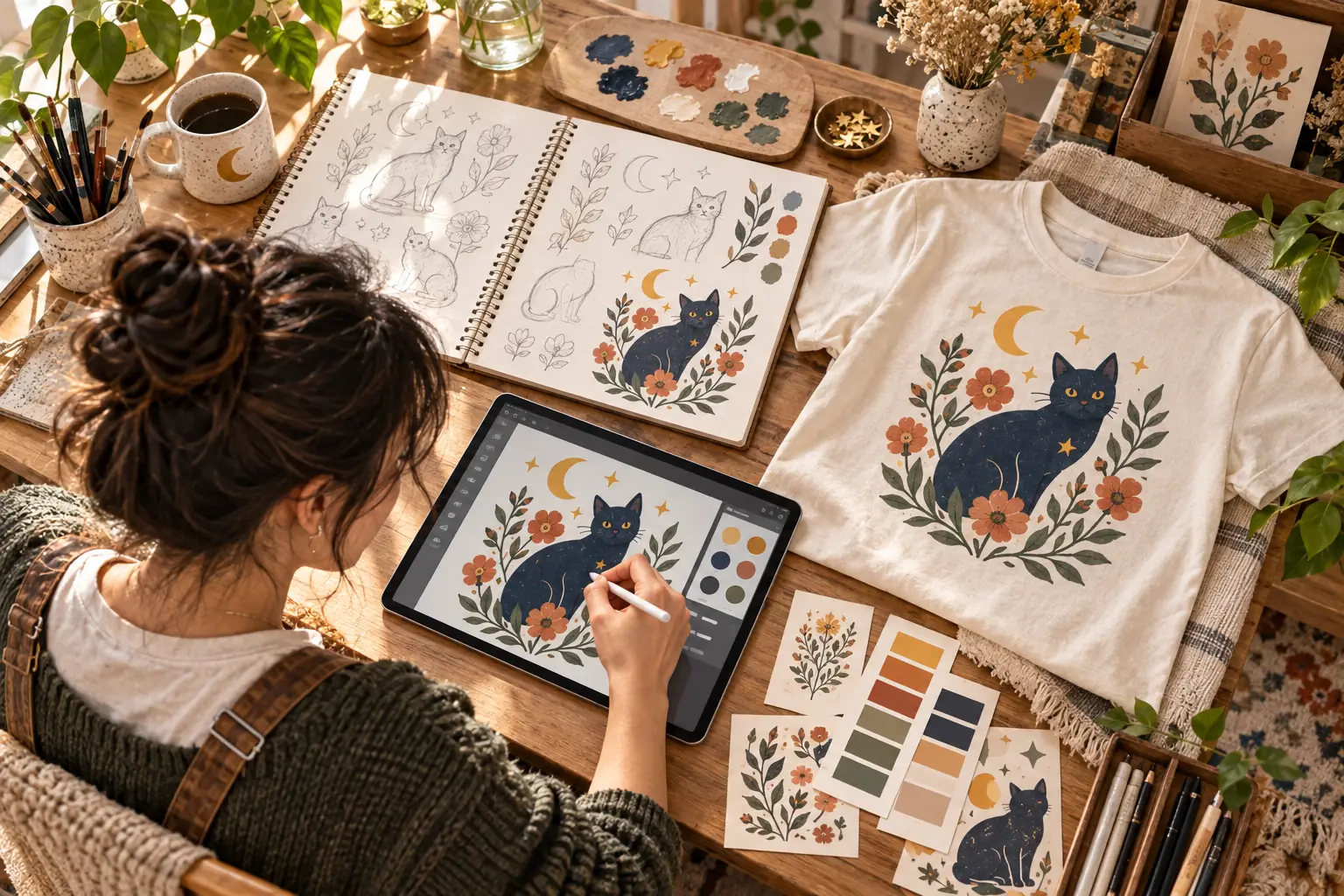
A large catalog may look impressive, but it also creates more mockups, descriptions, pricing decisions, and quality checks. For a new store, a focused capsule collection is usually easier to manage.
Start with one audience and one visual theme.
For example:
- Cat lovers: T-shirts, mugs, tote bags, stickers, and prints
- Book lovers: sweatshirts, bookmarks, posters, and reading journals
- Travelers: illustrated city posters, postcards, totes, and phone cases
- Pet owners: personalized portraits, blankets, mugs, and apparel
- Fantasy fans: character shirts, art prints, stickers, and accessories
Choose three to five Etsy POD products that naturally fit the buyer’s lifestyle. Your hero product could be a T-shirt or art print, while smaller products such as stickers provide an easier first purchase.
A simple product filter can help:
- Does this product fit the audience?
- Does the artwork remain clear at the required print size?
- Is there enough room for a sustainable profit margin?
- Would someone buy it as a gift?
- Does it strengthen the collection?
If the answer is mostly yes, the product is worth testing.
🖼️ Create Listings That Earn the Click
A strong Etsy product listing must answer two questions quickly:
What is this product, and why should I choose it?
Etsy explains that search visibility can be influenced by titles, tags, attributes, descriptions, categories, listing images, and customer experience.
Start with a clear title that describes the product naturally. Avoid stuffing the same phrase into every line.
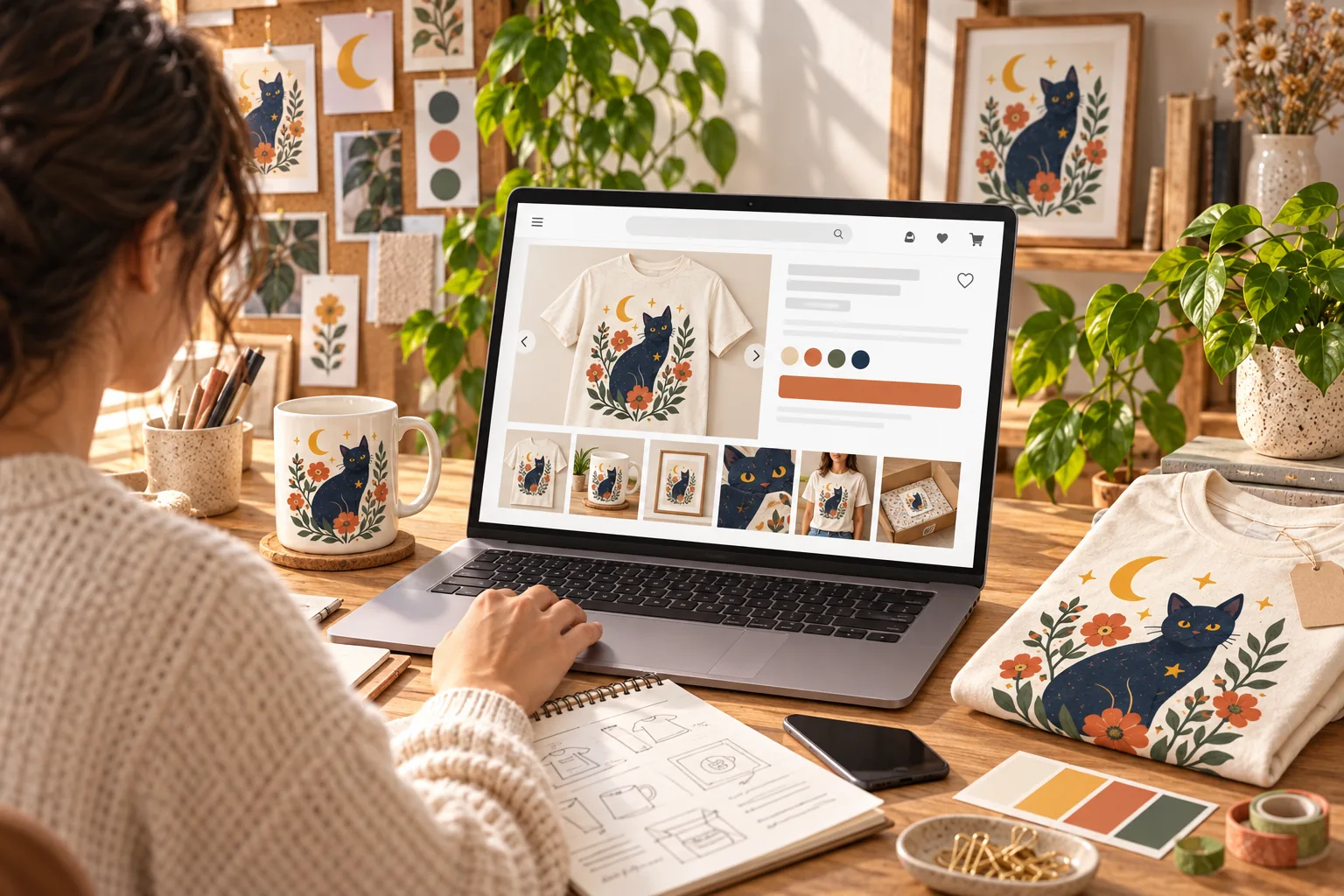
Then build a visual sequence:
- A clean main product image
- A lifestyle image showing the product in use
- A close-up of the print and material
- A size or scale reference
- Available colors or product variations
- Packaging or gift-ready presentation
Your first image needs to remain understandable as a small thumbnail. The product should be easy to identify, and the design should not disappear into a busy background.
Mockups are useful, but consistency matters. Keep lighting, colors, backgrounds, and visual style connected across the store. This makes separate listings feel like one brand.
Descriptions should cover material, sizing, production time, shipping expectations, care instructions, and possible color differences. Clear information reduces uncertainty and helps prevent disappointed customers.
🚀 Launch Your Creative Store with Genki
You do not need 50 products to start an Etsy print on demand business. A focused collection of five to ten listings can provide enough information to learn what buyers respond to.
After launch, observe:
- Which listings receive clicks and favorites
- Which designs lead to purchases
- Which product images perform best
- Which customer questions appear repeatedly
- Which products have healthy margins
Use those signals to improve the next release. If a cat T-shirt performs well, you might adapt the same artwork for a tote bag or mug. If buyers respond to one color palette, it could become part of your brand identity.
Genki can help creators turn visual ideas into product concepts and build a more connected path from design to merchandise. Instead of treating every product as a separate experiment, you can develop a recognizable creative collection designed for online selling.
✨ Ready to bring your artwork into the real world? Explore the Genki Creator Partnership and start building products around your creative identity.

Frequently Asked Questions
Is print on demand allowed on Etsy?
Yes. Etsy allows print-on-demand products when they use the seller’s original design or buyer-provided customization. The production partner must be disclosed, and generic ready-made products cannot simply be resold as handmade items.
Do I need to hold inventory?
No. With print on demand, products are normally manufactured after customers place their orders. You are still responsible for product accuracy, shipping information, customer service, and the overall buying experience.
How many listings should a new artist launch?
There is no fixed number, but five to ten coordinated listings can be a practical starting point. This provides variety without making the store difficult to manage. Expand after you identify the strongest products and designs.
Etsy print on demand works best when your store feels like a small creative universe—not a warehouse of unrelated graphics. Start focused, learn from real customers, and let your strongest ideas guide the next collection.